

Hearing loss often flies under the radar, even though it affects loads of people worldwide. A lot of us still think of it as just an issue for older adults, but in 2024, some of the numbers coming out are pretty surprising. I spend a lot of time reading up on health trends, and these recent stats really surprised me. There’s a lot going on beneath the surface that isn’t always obvious until you look closer. So, I pulled together ten of the most striking hearing loss statistics you’ll want to know this year.
Hearing Loss on the Rise: Surprising Growth Rates in 2024
Hearing loss isn’t just a problem for a small group. Data for 2024 show that over 1.5 billion people globally are living with some level of hearing loss, which is up by around 10% from five years ago. Experts at the World Health Organization expect that, at this rate, the number could grow even faster in the next decade. That means about 1 out of 5 people will be dealing with this in some form.
The biggest jumps are showing up in younger adults and even kids, which really caught my eye. Noisy environments, earbuds, and longer lifespans all play a part, but there are some other areas where things get even more surprising. Music streaming, social events, and busy cities are non-stop sources of loud sounds that many people never really think could cause problems.
Who Is Affected? Hearing Loss Isn’t Just for Older Adults
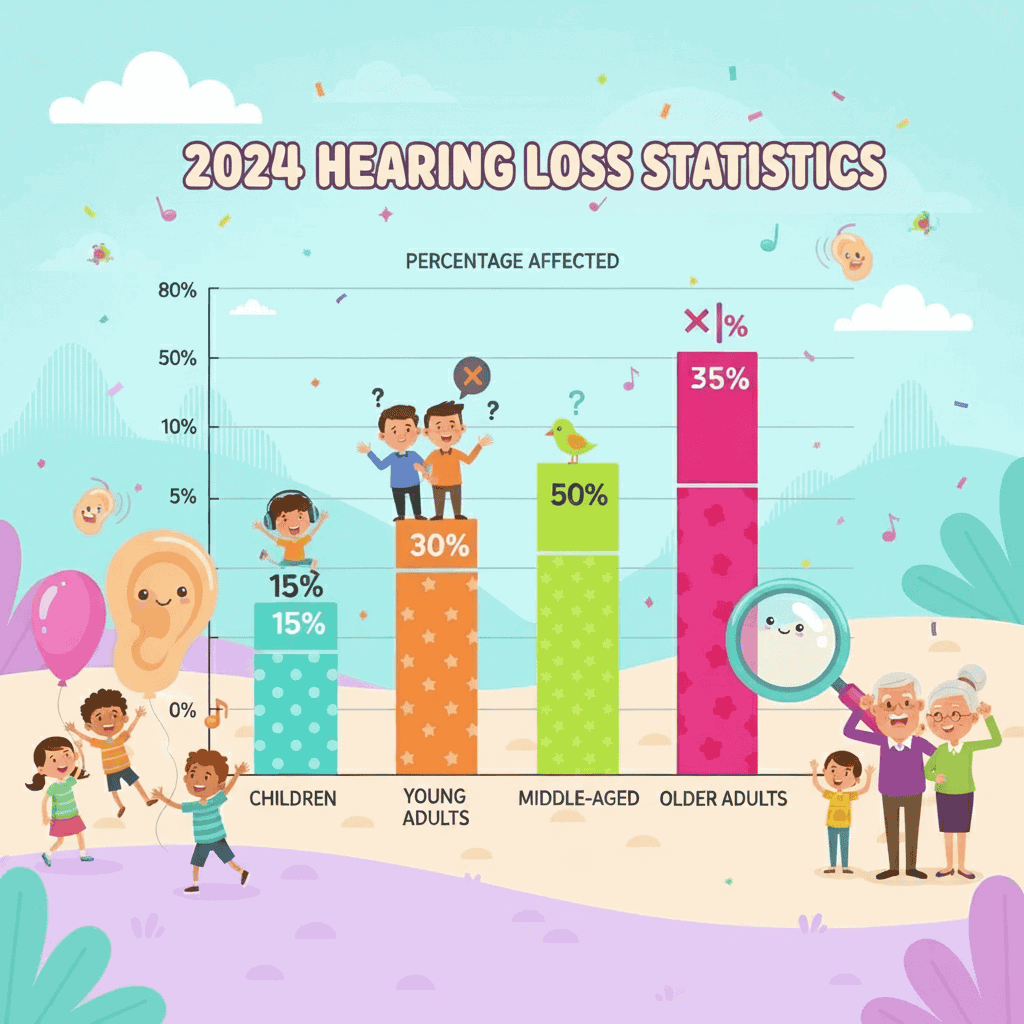
For a long time, the story was that hearing loss mostly hit you as you aged. In 2024, though, about 60% of people with hearing loss are under 65. Noise exposure on the job, blast volumes at concerts, and daily earbud or headphone use make a big difference. Recent surveys show nearly 30% of teens report some form of ringing or muffled hearing after listening to music with headphones, which is way up from what was seen ten years ago.
For anyone thinking “I’m too young for this,” the current stats suggest otherwise. In fact, one of the fastest growing groups getting hearing tests is people in their thirties and forties. For folks with kids, pediatric hearing screenings are becoming standard because problems are showing up earlier and earlier. College campuses have also noticed a big jump in students seeking help for hearing challenges, which points to a broader trend that deserves more attention.
Women and men seem to be affected similarly these days, and urban populations face unique risks. Occupational noise in cities often surpasses dangerous levels, adding yet another challenge for residents trying to keep their hearing sharp.
The Cost of Untreated Hearing Loss
What really surprised me this year is how much untreated hearing loss can actually cost a person. New studies put the global economic cost at over $1 trillion a year. That covers lost productivity, extra healthcare needs, educational costs, and broader impacts on the economy. For people missing out on early treatment, it can also end up being much more expensive in the long run, due to communication mishaps, missed work opportunities, or more complex health issues down the line.
For personal budgets, skipping hearing aids or regular checkups can stack up fast. The average person with untreated hearing loss ends up spending over 50% more on medical bills compared to those who get help early, according to recent insurance reviews. What’s more, families often shoulder unforeseen expenses such as speech therapy, transportation for specialist visits, and extra classroom support for kids experiencing hearing challenges.
Delayed Diagnosis: Most People Wait Five Years Before Getting Help
If you or someone you know has been dragging their feet about a hearing test, you aren’t alone. Statistics show a pretty big gap between first noticing issues and getting help, usually five years or more. People often brush it off, thinking it’s not a real problem or that asking for help is embarrassing.
The problem is, the longer you wait, the harder it becomes to adjust to new devices or treatments. Professionals now recommend annual hearing screenings for adults over 40, but a lot of people still skip them, even though modern tests are quick and painless. Some newer hearing clinics even offer mobile screenings at local events and workplaces, hoping to remove barriers and get people checked sooner.
Hearing Loss and Mental Health
The connection between hearing and mental health is getting more attention in 2024. People with hearing loss are much more likely to deal with depression, anxiety, and loneliness. In fact, adults with untreated hearing loss are at least twice as likely to show signs of serious depression.
This number really makes me think about how often folks just “power through” without realizing those down moods might link to hearing trouble. Even mild hearing loss makes socializing tougher, and research from just this year confirms that early intervention can help not just hearing, but overall well-being.
Studies show that social isolation caused by decreased communication can increase the risk for cognitive decline. Family members can also feel the effects, as strained communication may lead to frustration or misunderstanding at home. New therapy and support groups are starting up, specifically targeting mental health for those experiencing hearing loss, and these are making a positive difference for many people.
Technology Makes a Big Difference, but Most People Don’t Use It
There are some super cool hearing technologies out right now, such as nearly invisible hearing aids, Bluetooth streaming devices, and even smartphone apps that help manage volume levels or screen for problems. Despite these options, only about 20% of people who could really benefit from hearing aids actually use them in 2024.
The reasons vary. Some folks worry about stigma, others about cost, and some just don’t know what options are out there. Modern aids, though, can blend right into normal life and even connect directly to phones and smart TVs. If you haven’t checked out the new tech, it might surprise you how far things have come in just a few years. In addition, direct-to-consumer models and online assessments are helping people take the first step toward hearing improvement from home.
Hearing Loss and Other Health Conditions: Hidden Links
This year’s studies found stronger than ever connections between hearing loss and other problems like diabetes, heart disease, and even dementia. Data from several large research groups show that even mild hearing problems can increase your chances of struggling with memory or concentration by up to 50%.
Doctors now say routine hearing checks are just as important as blood pressure and cholesterol screenings, especially for anyone with a family history of heart or metabolic issues. More research is uncovering a link between unaddressed hearing problems and a quicker decline in brain processing speed, with some experts calling for hearing evaluations to be part of annual health exams for adults over forty.
Noise Exposure: The Modern Culprit
About half a billion people worldwide risk hearing damage just by being exposed to loud sounds in daily life. Popular stats show that safe listening habits are crucial, especially because noise-induced hearing loss is now one of the top drivers for young adults needing hearing aids.
- Concerts and festivals: Up to 60% volume at just one event can cause temporary ringing for days.
- Headphones and earbuds: Anything above 60% volume for more than an hour at a time increases long-term risk. If you can’t hear someone talking near you while your music is on, it’s probably too loud.
- Work environments: Construction, manufacturing, and even some offices with open layouts can easily top safe decibel levels.
Safe listening rules are now built into many devices, and some workplaces even give out free protective ear gear on the job. Urban commuters are also exposed to more noise than ever, making even a walk to work a risk for some people’s hearing.
Children and Hearing Loss: What Parents Should Know
Pediatricians are flagging hearing issues earlier and more often. This year, almost 1 in 15 kids has some kind of hearing loss, whether from chronic ear infections, genetics, or loud environments. The impact goes way beyond hearing, as studies show a clear link between early hearing problems and lower literacy or speech development scores in school-aged children.
Most states and countries now screen babies at birth, but ongoing checks are super important. Kids who get early treatment, such as tubes, hearing aids, or special therapies, are much more likely to stay on track socially and academically compared to those who wait. Teachers and school nurses play a big part in catching problems early and pointing families to the right resources. Community outreach programs continue to educate and support parents about best practices for maintaining their children’s hearing health.
Accessibility and Hearing Care: Gaps Still Remain
Even with all the advances in technology, getting access to quality hearing care still isn’t as straightforward as it should be. Nearly 80% of people with hearing loss worldwide don’t get the professional care or devices they need. In low and middle income countries, hearing aid coverage is often limited to fewer than two out of every hundred people.
New policies from organizations like the World Health Organization aim to close these gaps, and some places now require insurance to cover hearing tests and basic devices. There’s a huge push for more affordable and accessible care, but for now, the gaps are real, especially in rural and underserved areas. Mobile clinics and telehealth options are starting to make a difference in some remote communities, bringing essential care to more people.
Frequently Asked Questions
Sometimes the basics are what people are most curious about, so I pulled some of the most common hearing loss related questions I’ve had from readers and friends.
Question: How do I know if I should get my hearing checked?
Answer: If you have trouble hearing conversations, ask people to repeat themselves a lot, or you notice ringing in your ears, it’s a good idea to get your ears checked. Even if you’re not noticing these, a quick screening every couple years after age 30 is a smart move.
Question: Are hearing aids really worth it, and do they look obvious?
Answer: Modern hearing aids come in discrete styles and can make a huge difference, especially with all the tech upgrades out now. Many are barely visible and can even sync up with your other devices.
Question: Is it possible to prevent hearing loss?
Answer: Some forms are genetic, but you can lower your risk by using safe volumes on headphones, wearing ear protection in loud places, and getting regular checks to catch issues early.
Moving Forward with Hearing Health in 2025
The stats this year surprised even me, especially the number of young people and working adults affected. Keeping track of your hearing and acting early can make a major difference in health and happiness down the road. With so many new options for screening and support, there’s never been a better time to take hearing health seriously. Whether it’s for you or someone you care about, staying aware and up-to-date can really pay off. Take the first step to take care of your ears.