

Guess you are wondering what epidemic am I talking about? I’m not talking about 2020. I’m talking about the 1960’s epidemic. As a person with a hearing loss, I’m sharing a bit of information and my knowledge of what I know that occurred in my life.
What is Hearing Loss?
According to the WHO’s (World Health Organization) website, a person who is not able to hear as well as someone with normal hearing – hearing thresholds of 20 dB or better in both ears – is said to have hearing loss. Hearing loss comes in four levels which may be mild, moderate, severe, or profound. It can affect one ear or both ears, and leads to difficulty in hearing conversational speech or loud sounds.
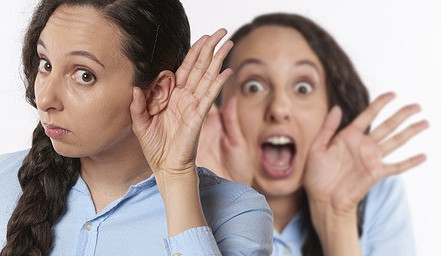
‘Hard of hearing’ refers to people with hearing loss ranging from mild to severe. People who are hard of hearing usually communicate through spoken language and can benefit from hearing aids, cochlear implants, and other assistive devices as well as captioning.
‘Deaf’ people mostly have profound hearing loss, which implies very little or no hearing. They often use sign language for communication.
Hearing Loss Statistics
There are over 1.5 billion people who lost their hearing due to genetics, work, age, injury, or illness according to WHO. Of that population there are over 430 million people who have a disabling hearing loss due to birth defects.
Hearing loss could occur from genetics. It could come from loud sounds heard daily at work without headphone protections. Any accidents, health issues, or head injuries can affect hearing loss. Most of all, age can be a factor for many over the age of 60 who starts to see their hearing dwindle as they get older.
There are people from all facets of life who suffered and deal with various levels of hearing loss on a daily basis at school, home, work, and social life. There are those that have lost their hearing as a young adult as well as those who never heard a sound from birth. Many spectrums of the hearing scale have been studied and researched which cannot be mentioned here but in general the focus here is on the hearing loss and birth defects.
History of German Measles/Ruebella and Hearing Loss
During the 1960’s in the United States, there was a German Measles epidemic that affected children and pregnant women. German measles was also called Rubella. It was a contagious disease running rampant around the country.
According to the Mayo Clinic’s website, more than 500,000 cases of measles occurred each year in the U.S. in the 20th century compared with 13 cases in 2020. According to the CDC’s website, in 1963, John Enders and colleagues transformed their Edmonston-B strain of measles virus into a vaccine and licensed it in the United States. In 1968, an improved and even weaker measles vaccine, developed by Maurice Hilleman and colleagues, began to be distributed.
Since the vaccines in the late 60’s, vaccines were combined into one vaccine. Doctors have provided the measles-mumps-rubella (MMR) vaccine as immunizations for all children. It became standard procedures for all children to receive their immunization MMR shots to prevent infection before they started school.
Women who were pregnant during this time had the risk of catching measles which can cause birth defects for their unborn child. Pregnant women couldn’t take the vaccines until after birth. Young children were susceptible to the disease as well. These birth defects can cause hearing loss, a hole in the heart, blindness, learning disabilities, low-birth weight, and other birth defects.
Birth defects was on the rise during this era. Measles were eventually eliminated in 2000.
My Life’s Journey
My mother contracted German Measles in the late 60’s. She noticed that she had rashes. She didn’t know how she got it and she didn’t do anything about it. I was born a preemie, and doctors did their regular testing on me and I went home with no visible signs of concern. At around eighteen months to two years, my mother determined that something was wrong with me after she banged some pots and pans making a loud sound behind my ears. The sound would have startled me but it didn’t. My mother made an appointment with the doctor.
After the doctor’s diagnosis, I had severe to profound hearing loss in both ears and needed to wear bilateral hearing aids at three years old. Of course at that age, I had to grapple with the sounds coming out of my dual hearing aids that must have hurt my ears. Sounds were unfamiliar to me which meant that I had to learn these sounds. Family members would make sure that I had them in my ears daily so I could be surrounded by sounds and recognize the noises. I’ve worn hearing aids my whole life. Very rare do I leave home without my hearing aids.
Plus, I was not given the opportunity to learn sign language for my parents refused to speak ASL with me. They were so determined to make sure that I speak and “hear” like normal people. They wanted me to be mainstreamed with society like normal people. I’ve gone through speech and hearing therapy during my elementary school years. During the speech and hearing therapy, I’ve learned lip reading. Speech and hearing therapy ended once I got to middle school.
Asking for help with assignments, clarification of what was said or taught in class, finding front seats in classes to understand teachers/professors, finding my place among the crowds of students were some of the many daily challenges I had to deal with on my own. I was left to deal with everyday issues on my own after high school. Sometimes I didn’t speak up but acted like I heard everything that was said to me with a “smile” at times. Unfortunately that put a hinderance on my learning or social skills in certain situations. It caused me to become introverted or become a “fly on the wall” or watching others in action to follow along. Over the years, I’ve struggled to be “normal” but there was something missing in my life. There was a void that was never filled.
Today
Today there are many like me with a hearing loss that are functioning well in society. There are many variations of deafness and hard of hearing citizens in this world that may have been touched by German Measles or other birth defects, environmental issues, or health issues that caused hearing loss.
Today we have assistive technology devices, services, and much more that the hard of hearing and deaf can depend on to become independent and self-sufficient in life. Many advancements were made to hearing aids and other assistive technology for those with hearing loss. I have made use of some of the assistive technology devices and apps I will eventually share with you.
Conclusion
Be conscious of those around us that may be lacking in hearing. Be sensitive and show some compassion or concern for one another. Be kind and have patience with one another for we all don’t know each other’s life stories or journey we are on.
Until then, take care of your Two Happy Ears.
Hearing loss happens when your ears can’t pick up sounds as clearly as they used to. It can range from mild, like missing a few words in conversation, to severe, where hearing everyday sounds becomes very difficult. Some people are born with hearing loss, while others develop it over time due to aging, loud noise, illness, or injury. It doesn’t mean silence—it just means sounds may seem muffled, softer, or harder to understand. Many people with hearing loss still enjoy conversations, music, and life with the right support or devices. The good news is, there are many treatments and tools available today to help improve hearing and communication.
I totally agree with you Norman! Thanks for reading!!
Thank you for sharing such a deeply personal and powerful story. It’s rare to see the long-term effects of the 1960s rubella epidemic framed so clearly through lived experience—your account truly brings historical statistics to life. Your description of learning sounds via hearing aids, navigating speech therapy, and becoming a “fly on the wall” in school was incredibly moving. I especially appreciated your closing reminder to “take care of your Two Happy Ears.” I’d love to learn more:
In what ways has modern assistive technology—like apps or newer devices—changed your experience compared to early hearing aid models?
And do you ever speak publicly or share resources to help others understand or support those with hearing loss, especially from congenital causes?
Thank you so much for your thoughtful message—it truly means a lot. I haven’t done any public speaking about my life with congenital hearing loss, but I’ve found that writing and connecting through platforms like this has opened up meaningful conversations I never expected. It’s been rewarding to share my experiences and hear from others who relate or want to learn more.
As for assistive technology, the changes have been remarkable. Living through the long arc of hearing technology—from analog aids with static and squeals to today’s sleek, app-connected devices—has been nothing short of transformative. Modern hearing aids now allow me to adjust settings on the fly, stream audio directly from my phone, and even use AI-based noise reduction in crowded spaces. It’s like going from a blurry black-and-white TV to high-definition surround sound. It’s a level of control and clarity I never imagined growing up.
Thanks again for your kind words and curiosity. I’m always happy to share and learn alongside others.